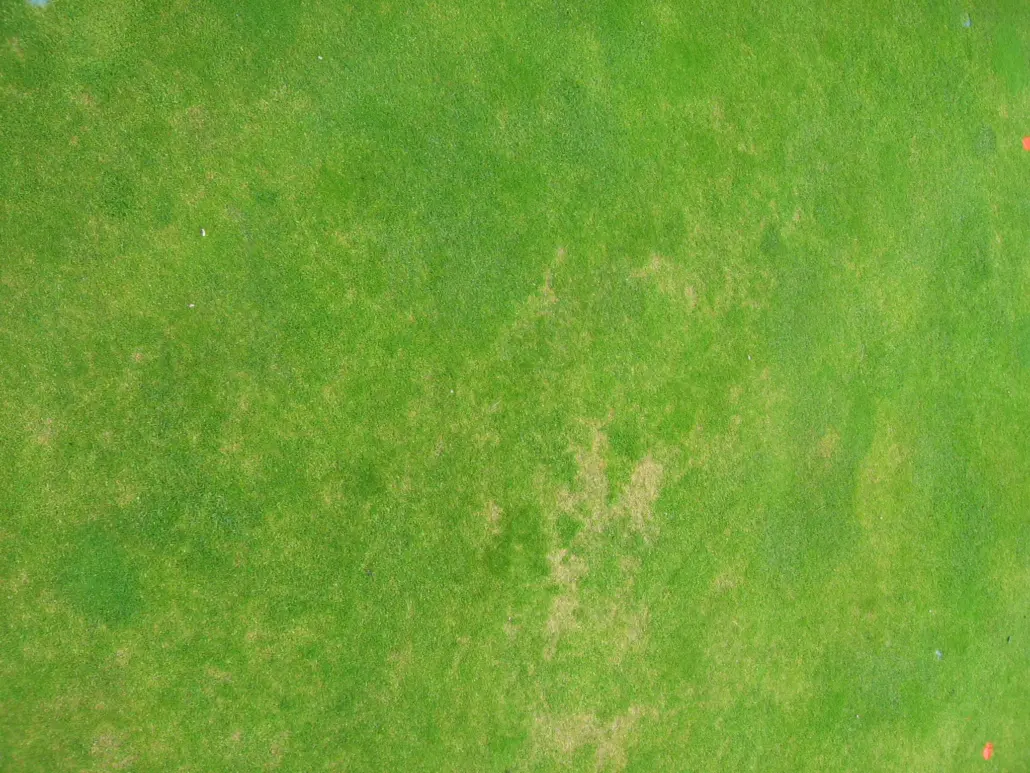
Two principles of Integrated Pest Management (IPM) are (1) that forecasting and early warning methods must be used where possible to avoid redundant use of pesticides, and (2) that decisions on pesticide application must be preceded by monitoring in the field. These principles are sometimes in conflict, as prediction tools may forecast disease outbreaks before any signs of disease can be seen in the field. Syngenta’s GreenCast model was validated as a prediction tool for fungicide applications against microdochium patch on an experimental golf green covered by annual bluegrass (Poa annua) at Bioforsk Landvik, Southern Norway, 1 Aug. 2013-24 Feb. 2014. The fungicides Headway (propiconazole + azoxystrobin) and Medallion TL (fludioxonil) were applied either Prophylactically at four-week intervals, at First sign of disease, at GreenCast Medium Risk Warnings or at Greencast High Risk Warnings in comparison with an Unsprayed control treatment. The turf was considered protected for four weeks after application, after which new applications were made according to the same criteria. Based on IPM principles, the application of Headway at First sign of disease (0.5% of plot area) was found to be the best management practice, providing adequate control of microdochium patch with three fungicide applications. Treatment according to Greencast High Risk Warnings resulted in slightly more applications, but still good control of disease with four applications, whilst GreenCast Medium Risk Warnings and the Prophylactic treatment provided nearly 100% control with six applications. We conclude that Greencast may be a supplement to careful monitoring of disease symptoms in the field, as it reflected the general increase in microdochium patch risk from August to December.